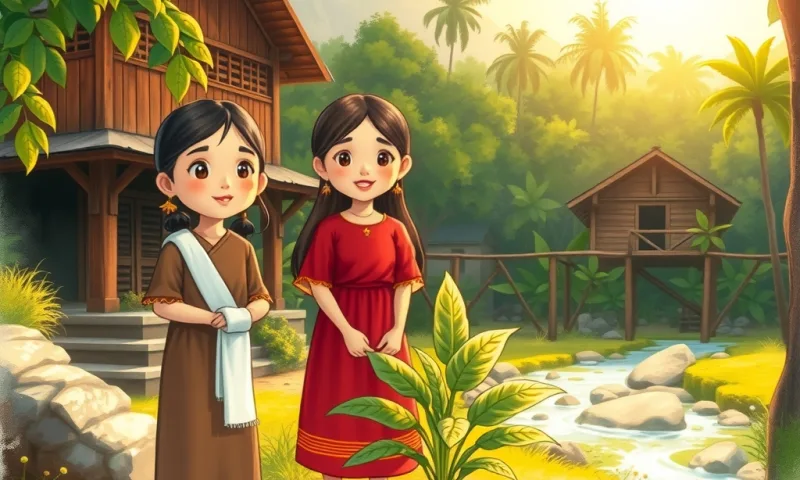
 In a small village located on the slopes of a volcano in Central Java, there lived a widow named Mbok Rondo who was known as the maker of the most delicious tempeh in the entire valley. However, behind the fragrance of her tempeh, there was a sad story that would make anyone who heard it sigh deeply. Mbok Rondo had a biological daughter named Bawang Merah, who was spoiled and lazy, as well as an adopted daughter named Bawang Putih, who was kind-hearted and diligent. Bawang Putih was an orphan whom Mbok Rondo had found beneath an old banyan tree when heavy rain was falling. Since childhood, Bawang Putih had always been taught to respect her elders and to be courteous to everyone, even to Bawang Merah, who often teased her. Even so, Bawang Putih never complained and always smiled, because she believed that goodness would always find its own way.
One bright morning, when the dew was still clinging to the leaves, Mbok Rondo called both of her daughters to the kitchen. "Bawang Merah, Bawang Putih, today we are going to make tempeh to sell at the village market," said Mbok Rondo as she tied her hair with a batik cloth. Bawang Merah immediately wrinkled her nose lazily. "Oh, Mother, I'm busy painting my nails," she grumbled while playing with her bright red shawl. Bawang Putih smiled slightly and said, "It's all right, Mother. I will help you by myself. Bawang Merah can just rest." Mbok Rondo sighed, but she knew that Bawang Putih could always be relied upon. So they began to work, while Bawang Merah sat on the veranda singing dangdut songs in a off-key voice that made the chickens in the yard run away in fright.
That day, Mbok Rondo asked Bawang Putih to go to the river to wash the soybeans. "Be careful, dear. The river is swift because of last night's rain," Mbok Rondo said as she handed over a bucket of soybeans. Bawang Putih nodded obediently and walked along the footpath surrounded by banana trees. Along the way, she met an old man sitting on a rock stroking his long white beard. "Child, may Grandfather ask for a drop of drinking water? My throat is very dry," the old man asked in a hoarse voice. Bawang Putih immediately set down her bucket and poured water from her provision gourd into the old man's palms. "Please, Grandfather. Forgive me for only bringing plain water," she said politely while bowing. The old man smiled, then said, "You are a good child. One day, your kindness will return to you." After drinking, the old man disappeared behind the trees, leaving behind the fragrant scent of jasmine.
Upon arriving at the river, Bawang Putih began washing the soybeans diligently. However, without realizing it, a single soybean fell and was swept away by the swift current. Bawang Putih panicked and tried to chase after it, but the soybean was already far away. "Oh no, what do I do? Mother will surely be angry if she finds out I lost a soybean," she murmured while holding back tears. She then mustered the courage to walk along the riverbank, hoping the soybean had gotten caught among the rocks. In the middle of her search, she saw a small cave behind a waterfall. Hesitantly, Bawang Putih entered the cave and was surprised to see an old woman pounding rice with a wooden mortar. "Excuse me, Grandmother. Forgive me for disturbing you. Have you seen a soybean float by here?" asked Bawang Putih with a respectful bow. The old woman lifted her wrinkled face and smiled. "That soybean is now mine. But if you are willing to help me pound this rice, I will return it to you," said the old woman. Bawang Putih nodded and immediately helped pound the rice with great enthusiasm, even though her hands were beginning to blister.
After finishing the pounding, the old woman gave her a soybean that had turned into gold. "This is a gift for you because you have been polite and willing to help," said the old woman. Bawang Putih was astonished and tried to refuse, but the old woman insisted. "Keep it. You are a kind-hearted child, and your kindness will always be watched over by the universe." Bawang Putih then went home with a heart full of joy. Upon arriving home, she told Mbok Rondo and Bawang Merah everything that had happened. Bawang Merah, upon hearing the story, was immediately envious and determined to do the same thing. The next day, Bawang Merah went to the river and deliberately dropped a soybean into the water. She hurried into the cave and met the same old woman. However, when the old woman asked her to pound rice, Bawang Merah refused rudely. "I don't want to! I only want the gold!" she shouted while stomping her feet. The old woman shook her head and said, "You will not get anything with an attitude like that." Bawang Merah then went home empty-handed and cried all the way.
In the midst of Bawang Merah's disappointment, a boy named Gareng arrived, the son of a tempeh seller from a neighboring village. Gareng was a cheerful boy, a little clumsy, but very loyal. He came to Mbok Rondo's house to buy tempeh, but instead got caught up in the chaos created by Bawang Merah. "Hey, Bawang Merah! Why is your face as gloomy as tempeh that failed to ferment?" asked Gareng with a laugh. Bawang Merah glared, but Bawang Putih quickly interjected, "Gareng, don't be like that. Bawang Merah is sad because her wish wasn't fulfilled." Gareng scratched his head and said, "Oh, sorry. I was only joking. How about we make tempeh together? I have a secret recipe from my father that can make our tempeh taste better than the tempeh made by Mbok Rondo!" Bawang Merah was intrigued and finally agreed to join Bawang Putih and Gareng in making tempeh. The three of them worked together in the kitchen, with Gareng often mismeasuring the yeast and Bawang Merah busy tasting raw tempeh. Their laughter filled the room, and for the first time, Bawang Merah felt that working together was fun.
However, that happiness was disturbed when Mbok Rondo fell ill from exhaustion. Bawang Putih immediately cared for her with great affection, while Bawang Merah began to learn to help with the household chores. One day, while Bawang Putih was washing clothes at the river, she saw a little girl crying at the edge of the waterfall. The girl was named Sari, and she had lost her mother's necklace, which had fallen into the river. "Don't worry, Sari. I will help you find that necklace," said Bawang Putih as she dove into the water. After a while, she managed to find the necklace and returned it to Sari. Sari was very grateful and gave Bawang Putih a cloth bundle. "This is a gift from my mother. She told me to give it to the person who helped me," said Sari. Bawang Putih opened the bundle and found a magical tree seed that could grow overnight. She planted the seed in the yard of the house, and the next day, the tree had grown tall with fruits that sparkled like gold.
Bawang Merah, who saw the magical tree, was once again overcome with envy. She decided to look for the little girl named Sari and pretend to have lost a necklace in order to get the same seed. However, when she met Sari, she instead scolded the girl because her necklace had still not been found. "You careless girl! If only you hadn't dropped that necklace, I wouldn't have had to go through all this trouble to come here!" snapped Bawang Merah. Sari cried and left her. Bawang Merah returned home empty-handed and grew even angrier. Seeing this, Bawang Putih approached her sister gently. "Sister Bawang Merah, there is really no need to seek rewards. We already have everything here. Mother, our friends, and our togetherness," said Bawang Putih with a smile. Bawang Merah fell silent and began to reflect on her actions.
One day, their village was struck by a long drought. The wells dried up, and the tempeh crops began to fail. Mbok Rondo, who was still ill, grew weaker. Bawang Putih and Gareng tried to find water in the forest, but the result was nothing. In the midst of despair, Bawang Merah suddenly remembered the magical tree that Bawang Putih had planted. "Bawang Putih, your tree bears golden fruit, right? Maybe we can trade it for water in the neighboring village," suggested Bawang Merah. Bawang Putih shook her head. "Those fruits are not for sale, Sister. But maybe we can ask the old woman in the waterfall cave for help. She must know how to overcome this drought." So they went to the cave together. The old woman welcomed them warmly and said, "This drought has happened because you have forgotten your manners toward nature. Plant trees again around the springs, and keep the river clean. Then the water will flow again." Hearing this, Bawang Merah immediately bowed her head in shame. She apologized to the old woman and promised to change.
After returning from the cave, Bawang Merah led the villagers to plant trees around the spring. She worked hard without complaining, even willingly getting covered in mud to plant banyan seedlings. Bawang Putih and Gareng helped along cheerfully. The clumsy Gareng accidentally fell into a planting hole and made everyone laugh. "Gareng, are you planting a tree or burying yourself?" teased Bawang Merah, laughing. Gareng just grinned and said, "At least I've become natural fertilizer!" All the villagers burst out laughing. After a few weeks, the rain finally came. The spring flowed again, and their village turned green once more. Mbok Rondo, seeing the change in Bawang Merah, wept with emotion and embraced both her daughters. "I am proud of you both. Bawang Merah, you have learned that goodness does not come from gifts, but from a sincere heart," said Mbok Rondo.
From that day on, Bawang Merah and Bawang Putih became sisters who loved each other. Together they managed the family tempeh business and became famous throughout the village. Bawang Merah was no longer lazy and spoiled, but became a diligent and spirited girl. She also learned to respect her elders, as Bawang Putih had always taught her. One day, while drying tempeh in the yard, Bawang Merah saw an old man walking with a cane. She immediately approached him and offered help. "Grandfather, let me help carry your things," said Bawang Merah politely. The old man smiled and said, "You are a good child. Not like before." Bawang Merah was surprised, but then smiled. She realized that sincere kindness will always be remembered, even by those who were once disappointed in her.
The story of Bawang Merah and Bawang Putih spread throughout the land. Many people came to their village to learn how to make tempeh and to hear their inspiring story. Gareng, who had now become a successful tempeh seller, always recalled the funny times when the three of them made tempeh for the first time. "If it weren't for Bawang Merah, who loved tasting raw tempeh, we might never have known that tempeh could taste better with a little added sugar," recalled Gareng, laughing. Bawang Merah just blushed shyly, while Bawang Putih smiled proudly. The three of them embraced, grateful for a friendship that had changed their lives.
The moral of this story is that kindness of heart, patience, and good manners will always bring blessings into one's life. Bawang Putih teaches us to always do good without expecting reward, to respect our elders, and to be courteous in any situation. Meanwhile, Bawang Merah teaches us that mistakes can be corrected if we are willing to learn and change. Envy and rude behavior only bring harm, while cooperation and friendship bring happiness.
In addition, this story also reminds us of the importance of protecting nature and the environment. The drought that struck their village was the result of human negligence in caring for the water source. By planting trees and keeping the river clean, we can ensure that nature will continue to provide life for future generations. Respect for nature is just as important as respect for fellow human beings.
Moral of the Story
Kindness, patience, and good manners will always bring blessings. Bawang Putih teaches us to do good without expecting anything in return and to respect our elders, while Bawang Merah teaches that mistakes can be corrected with the willingness to change. Envy and rude behavior only harm oneself, whereas cooperation and friendship bring happiness.
This story also reminds us of the importance of caring for nature. Drought caused by human negligence can be prevented by planting trees and keeping rivers clean. Respect for nature is just as important as respect for one another, because a well-preserved nature will provide life for future generations.



Leave a Message